
Sandeep Bahl
Texas Instrument
Sandeep Bahl is a recognized leader in semiconductor technologies. He co-founded TI’s GaN product line and co-invented TI’s direct-drive GaN architecture. He is presently focusing on the ramp and acceleration of GaN technology, to bring reliable power electronics products to market. Since traditional reliability testing does not cover use cases of power electronics, he has developed methodologies to know that GaN products will be reliable in all kinds of applications. He works with customers to understand their use-cases, assesses the operational impact of the system-level stresses on devices, and drives efforts across technology teams to assure high-quality parts. Sandeep also played a key role in the GaN industry standardization effort, which led to the formation of the JEDEC JC70 committee and the increasing market adoption of GaN. He serves as co-chair of the JC70 GaN reliability task group and led the first JEDEC GaN reliability guideline, JEP180. Sandeep has a PhD from MIT and is a distinguished member of technical staff at TI.

Helmut Brech
Infineon Technologies Germany
Helmut Brech received his Ph.D. in Electrical Engineering from the Technical University of Vienna, Austria, working on GaAs-based HEMT optimization by numerical simulations. In 1998 he joined Motorola/Freescale in Tempe, AZ, developing multiple generations of RFLDMOS. Since 2007 he is with Infineon Technologies as a Distinguished Engineer leading the RFGaN-on-Silicon RF Power technology pre-development and innovation. He is holding over 30 patents. His current research interest is to deliver on RFGaN-on-Silicon’s promise as a commercially viable, high performance, reliable and cost effective RF Power technology.

Dr. Eric W. Bryerton
Virginia Diodes, Inc.
Dr. Eric W. Bryerton received his BS in electrical engineering from the University of Illinois in Urbana-Champaign and his PhD in electrical engineering from the University of Colorado at Boulder. From 1999-2013, he was a research engineer at the National Radio Astronomy Observatory (NRAO) where he was responsible for the design, development, and construction of the 30-950 GHz local oscillator system for ALMA (Atacama Large Millimeter Array), an array consisting of 66 twelve-meter antennas with nearly quantum-noise limited cryogenic SIS receivers located on the Atacama plateau in northern Chile. Since joining VDI in 2013, Eric has been leading the implementation of millimeter-wave and THz solutions to numerous R&D areas, including sub-millimeter test equipment extender modules, CubeSat atmospheric radiometers, and high-data-rate millimeter-wave communications. He is currently the Chief Technology Officer at VDI.

Scott Burroughs
Uviquity
Scott Burroughs is Co-Founder and Chief Executive Officer of Uviquity where he is pioneering solid-state far-UVC disinfection technology. Scott is a seasoned technology executive and entrepreneur with deep expertise in photonics, semiconductor lasers, and advanced optical systems. With a track record of leadership across seven start-up ventures—including multiple successful exits—he excels at building innovative, high-impact products and scaling them to market. Previously, Scott co-founded and led Sense Photonics from inception through acquisition, driving breakthroughs in Flash LIDAR and SPAD array technology. He has held executive roles at leading photonics firms including Bell Labs, Nortel Networks, and Santur.

Jonathan Chisum
University of Notre Dame
Jonathan Chisum received the Ph.D. in Electrical Engineering from the University of Colorado at Boulder in Boulder, Colorado USA, in 2011. He is currently an Associate Professor of Electrical Engineering at the University of Notre Dame. From 2012 to 2015 he was a Member of Technical Staff at the Massachusetts Institute of Technology Lincoln Laboratory in the Wideband Communications and Spectrum Operations groups. His work at Lincoln Laboratory focused on millimeter-wave phased arrays, antennas, and transceiver design for electronic warfare applications. In 2015 he joined the faculty of the University of Notre Dame. His research interests include millimeter-wave communications and spectrum sensing using novel and engineered materials and devices to dramatically lower power consumption and cost and enable pervasive deployments. Recent work in his group has focused on gradient index (GRIN) lenses for low-power millimeter-wave beam-steering antennas. He is a co-founder of Cheshir Industries, a company dedicated to the commercialization of GRIN lens antennas for wireless and sensing applications. In 2025 Dr. Chisum was a Visiting Senior Fellow at the Naval Research Laboratory. He has published over 70 peer reviewed journal and conference papers and holds 16 patents. He is a senior member of the IEEE, an affiliate of Spectrum-X, and an elected Member of the U.S. National Committee (USNC) of the International Union or Radio Science's (URSI). He is the current Chair for USNC-URSI Commission D: Electronics and Photonics, and an Associate Editor for IET Electronics Letters.

Dr. Alan Doolittle
Georgia Institute of Technology
Dr. W. Alan Doolittle is the John Slaughter Professor in Semiconductors in the School of Electrical and Computer Engineering and leads the Advanced Semiconductor Technology Facility at Georgia Institute of Technology. He received his B.E.E. with highest honors and his Ph.D. in Electrical Engineering in 1996 from Georgia Tech. He is the founder of Innovative Advanced Materials Inc., a next generation epitaxy tool developer and consults on a variety of scientific and legal topics in the semiconductor space. His principal research interest is the development of innovative nitride-based and crystalline oxide-based devices as well as applying new growth techniques to facilitate material and device improvements. Dr. Doolittle has pioneered the areas of hyper-doping of wide bandgap semiconductors including the first substantial bulk conductivity in aluminum nitride, 40 times greater than the prior art carrier concentrations in p-type gallium nitride and growth and integration of III-Nitrides on lithium-metal-oxides such as lithium niobate among others. Dr. Doolittle has led prestigious MURI programs focusing on the development of next generation epitaxial systems for three-dimensional epitaxy, the development and exploitation of epitaxial multifunctional oxides and uses of ion insertion and extraction similar to what happens in battery materials to fundamentally change the nature of materials at the atomic scale with application to neuromorphic computing. He has authored/co-authored over 200 research papers/presentations
and 12 patents.

James Grandusky
Crystal IS
James Grandusky received his Ph. D. degree in nanoscale science and engineering from the University at Albany, Albany, NY, USA in 2007. From 2007 to 2021, he was a Senior Engineering developing epi processes on bulk AlN substrates for ultraviolet light emitting diodes, developing test and reliability methodologies, and developing substrate fabrication processes for bulk AlN substrates. Since 2021 he has been Director of Substrate R&D at Crystal IS in Green Island, NY, USA responsible for developing and commercializing 100 mm bulk AlN substrates.

Dr. Zach Griffith
Teledyne Scientific
Dr. Zach Griffith completed his PhD degree in Electrical Engineering from UC Santa Barbara in 2005 with emphasis on semiconductor fabrication and IC design, where he developed numerous record performance high-frequency InP HBT transistors.
In 2008 he joined Teledyne Scientific and currently hold the position of Principle Engineer in the area of mm-wave and THz IC design – this work utilizes Teledyne’s in-house InP HBT and HEMT technologies. Design accomplishments include full waveguide band power amplifiers from 50-260 GHz and 100-250 GHz PA designs with record output power and efficiency. His current focus is on the continued development of these solid-state PA chips and their product transition. He is a Senior Member of IEEE, has authored over 150 publications, and hold several patents associated with this work.

Dr. Klaus Heyers
Bosch Germany
Dr. Klaus Heyers received his Dipl. Ing in electrical engineering with focus on solid state electronics at the RWTH-Aachen in 1988 and his Ph.D at the “Institut für Halbleitertechnik” in 1992 at the same university with research in the field of Rapid Thermal Processing for advanced CMOS Devices. In 1992 he joined the Robert Bosch GmbH and was involved in the development of Si-MEMS Sensors. After several positions in Corporate Research and Business unit Electric Drives he is working in the field of SiC-Technology since 2008. Currently he acts as Chief Expert for wide-bandgap Semiconductors.

Robert Howell
Northrop Grumman
Robert Howell received the B.S. degree in engineering and the B.A. degree in history from Swarthmore College, Swarthmore, PA, in 1995, and the Ph.D. degree in electrical engineering on the topic of polycrystalline silicon thin film microelectronics for displays from Lehigh University, Bethlehem, PA, in 2000. Since then he has been with Northrop Grumman Corporation in Linthicum, MD, currently in the Mission Systems Sector, where he has performed and led research and development of semiconductor devices and processes in a wide variety of material systems, including SiC, GaN, Si, GaAs, and GeTe, and a variety of device types, such as DMOSFETs, TFTs, SITs, HBTs, and HEMTs, most notably the invention of the SLCFET device topology for low loss RF and microwave switching applications. He was made an NG Fellow in 2017 and is a system architect for microelectronics in the Mission Systems’ Advanced Technology organization, supporting the development of advanced microelectronic components and their packaging suitable for next generation system architectures. He has co-authored over 100 publications and holds more than 25 patents.

Surya Iyer
Polar Semiconductor
Surya Iyer is President & COO at Polar Semiconductor and previously held senior positions at Cypress Semiconductor Corp. and Applied Materials, Inc. Surya is a recipient of the Twin Cities Business TCB100 award in 2025 and was recognized by the India Association of Minnesota with an Honorary Award for Science and Technology in 2025. Surya serves as the Chair of the Minnesota Governor’s Workforce Development Board, is a member of the Governing Council for SEMI/FOA (a semiconductor industry association), is a member of the University of Minnesota’s Innovation MN Advisor Board and is an adjunct Professor of Engineering at the University of St. Thomas. Surya attended Wharton, was a fellow at Stanford University, received his post-graduate degrees from Washington University in St. Louis, an undergraduate engineering degree from IIT-Kanpur, and has 20 patents related to semiconductor processing and equipment design.

Karl Knieriem
STRATACACHE
Karl Knieriem is a leading authority in III-Nitride semiconductor technologies with over 25 years of experience driving innovation from the lab to high-volume manufacturing. Currently serving as the Senior Director of MOCVD Epitaxy R&D at STRATACACHE, he specializes in the advancement of (InAl)GaN-on-Si (111) for next-generation MicroLED, MiniLED, and power device applications.
Throughout his career, he has held pivotal leadership and technical roles at global industry pioneers, including Plessey in UK, Aledia in France, Toshiba in Japan, and Veeco Instruments. His expertise spans the entire MOCVD ecosystem—from hardware design and control logic to the development of complex epitaxial structures on Veeco, Aixtron, and AMEC platforms. A veteran of the global tech landscape, he has a proven track record of establishing new production lines in offshore foundries and leading cross-functional teams through rigorous R&D and quality control cycles.
Beyond his technical achievements, he brings a mission-first leadership style forged through more than a decade of service in the U.S. Air Force and Army Reserves. By combining deep materials science expertise with disciplined operational management, he continues to push the boundaries of what is possible in semiconductor research and device performance.

Markus Maute
ams OSRAM International GmbH
Markus Maute studied Physics at the University of Karlsruhe and received his Diploma in Semiconductor Spectroscopy in 2001. He continued his work in semiconductor device technology at the Technical University of Munich, where he earned his Ph.D. in 2006 with a focus on MEMS tunable long wavelength VCSELs.
To bring innovative concepts into industrial applications, he joined Firecomms in Cork, Ireland, developing red VCSELs and RCLEDs for sensing and optical communication. In 2008, he moved to ams OSRAM in Regensburg, Germany, as a chip development engineer, where he led the development and successful high volume ramp-up of a blue thin film LED platform that remains a core product in today’s portfolio.
Since transitioning to process development in 2013, he has held several management positions within ams OSRAM. He currently heads Frontend Process Development, overseeing the technological foundation for all new LED and laser products.

Hasan Sharifi
HRL
HASAN SHARIFI (Senior Member, IEEE) received the bachelor’s and master’s degrees in electrical engineering and the Ph.D. degree in the areas of microelectronics and nanotechnology from Purdue University, West Lafayette, in 1994, 1997, and 2007, respectively. He is currently a Division Director for Sensing and Communication Systems, HRL Laboratories, Malibu, CA, USA.. His research interests include design, fabrication, and integration of RF/millimeter wave components and subsystems for next-generation phased-array radar and communication systems. Before joining HRL, he was a Research Staff Member with Birck Nanotechnology Center, Purdue University, West Lafayette, IN, USA, from 2005 to 2009, where he worked on CMOS-based RF integrated circuits and advanced heterogeneous integration and packaging. He has authored or coauthored more than 85 journal and refereed conference papers and holds more than 45 issued patents. He was the recipient of a number of awards, including special and extraordinary merit awards from Purdue University and HRL Labs. He was on the Technical Program Committee and Editor of the IEEE Silicon Monolithic Integrated Circuits in RF Systems Conference. He is a member of Microwave Theory and Technology and Advanced Packaging societies.

Siddarth Sundaresan
Navitas Semiconductor
Siddarth brings over 15 years of pioneering experience in SiC and GaN power device and process technologies to Navitas. Siddarth was a critical innovator at GeneSiC Semiconductor gaining over 20 patents, over 60 peer-reviewed technical papers, and helped to establish GeneSiC as the industry leader in high voltage, high-temperature SiC technology.
Siddarth holds a BS in Computer Engineering from the University of Mumbai, India, a Master’s in Electrical Engineering and PhD in Electrical and Computer Engineering from George Mason University, Fairfax, VA, USA.Siddarth brings over 15 years of pioneering experience in SiC and GaN power device and process technologies to Navitas. Siddarth was a critical innovator at GeneSiC Semiconductor gaining over 20 patents, over 60 peer-reviewed technical papers, and helped to establish GeneSiC as the industry leader in high voltage, high-temperature SiC technology.
Siddarth holds a BS in Computer Engineering from the University of Mumbai, India, a Master’s in Electrical Engineering and PhD in Electrical and Computer Engineering from George Mason University, Fairfax, VA, USA.

Dr. James Tweedie
MACOM
Dr. James Tweedie is a Senior Principal Engineer and recognized expert in wide bandgap semiconductor materials for RF and power device applications. His work spans the growth, processing, and characterization of advanced GaN/SiC technologies, including novel defect engineering methods, high pressure dopant activation, innovative HEMT barrier materials, and non destructive X ray characterization techniques.
Dr. Tweedie currently leads cross functional, multi organization teams across several major government and industry funded programs, coordinating technical execution, customer engagement, and program delivery. He has played a key role in securing and executing large scale NRE efforts that directly support advanced RF power and MMIC technology roadmaps.

Eric Virey
Yole Intelligence
Eric Virey serves as a Principal Display Market and Technologies Analyst within the Photonics & Display division at Yole Intelligence. He has authored a large collection of market and technology reports and contributed to dozens of special consulting projects (strategic advising, buy/sell side M&A and due diligences, technology scouting, cost modelling etc.
Eric has spoken at more than 80 industry conferences covering the display, LEDs and quantum dots, phosphors and sapphire industries. He has been interviewed or quoted in multiple media including: The Wall Street Journal, CNN, Fox News, CNBC, Bloomberg, Ars Technica, Financial Review, Forbes, The Boston Globe, Technology Review, etc. He is also a regular contributor to various display industry media and organizations.
Prior to joining Yole, Eric held R&D, engineering, manufacturing and marketing positions with Fortune 500 Company Saint-Gobain in France and the United States. Eric received a PhD in Optoelectronics from the INP – UGA in Grenoble, France. He is based in Portland, OR.

Dr. Mike Wiemer
Mojo Vision
Dr. Mike Wiemer is a serial entrepreneur with a B.S., M.S., and Ph.D. in Electrical Engineering from Stanford University. In 2007 Mike co-founded Solar Junction, a high-efficiency solar cell company. At Solar Junction (acquired), Mike and team set two world records for the highest efficiency solar cells ever made. In early 2015 Mike joined New Enterprise Associates (NEA) as an Entrepreneur in Residence. NEA is one of the oldest and largest VC firms in the world.
In 2016 Mike co-founded Mojo Vision where is serves as CTO. Mojo is commercializing micro-LED–based products, leveraging its multidisciplinary capabilities across materials, devices, optics, CMOS, and software.
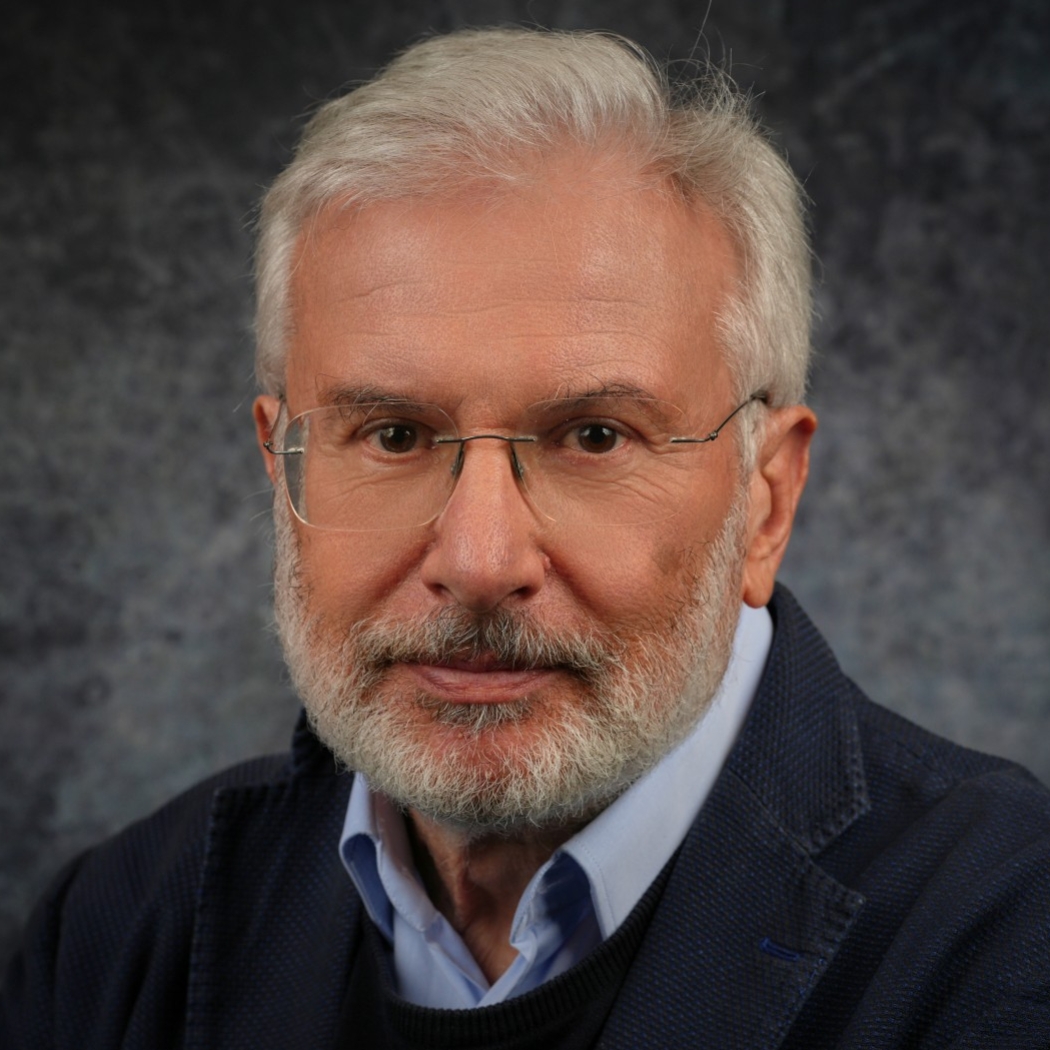
Enrico Zanoni
University of Padova
Enrico Zanoni is Professor of Microelectronics at the University of Padova, Italy since 1988, and IEEE Fellow.
The focus of his research is on the characterization, modeling and reliability of compound semiconductor
devices, and in particular: GaN-based and SiC-based electron devices for power conversion, GaN High
Mobility Transistors for microwave and millimeter-wave applications, GaN visible and ultraviolet
LEDs. His research group is composed by approximately 30 people (https://acme.dei.unipd.it/home/projects/).
At Padova, research work on GaN started in 1999. Since then Enrico Zanoni coauthored more than
400 scientific papers on this subject, which have been cited approximately 12000 times.
At MANTECH 2026, Prof. Zanoni will talk about the effects of deep levels on the performance and reliability
of GaN HEMTs, and on the methods for experimentally characterize and model those effects.

Dr Xianwu (Vincent) Zeng
University of Bath
Dr Xianwu (Vincent) Zeng is a Reader/Associate Professor in Mechanical Engineering at the University of Bath and a leading researcher in cryogenic and power electronics systems for advanced propulsion and energy applications. His research focuses on high-efficiency electric drives, power converters, and cryogenic technologies that enable next-generation electrified transport and renewable energy integration.
Dr. Zeng has a professional background encompassing a wide range of industry experience. Dr Zeng was a Power Electronics specialist at GE Grid Solutions, where he developed HVDC valve units and high-power converters used in large-scale energy systems. He was also involved in automotive projects including kW level DC-DC converter and inverter. His work bridges academic innovation and industrial application, combining rigorous theoretical insight with practical engineering solutions.