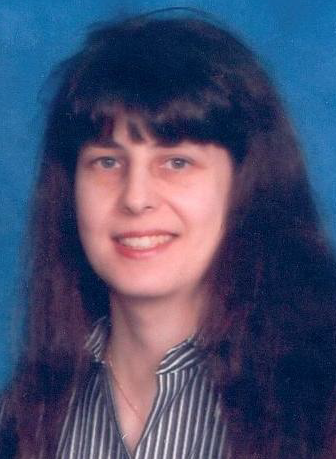
Gergana Drandova (Qorvo)
• Talk: Reliability data analysis using Minitab statistical software
• Bio:
Gergana Drandova is an R&D Fellow at Qorvo with 25 years of experience in reliability, GaN and GaAs technology development, and device modeling. She holds a Ph.D. in Physics from the University of Texas at Austin. Gergana has a number of publications and conference presentations and is currently a member of the technical program committees at ROCS and the “RF, 5G, and mmW” session at IRPS. She is also the vice chair of the 14.7 JEDEC committee for RF Reliability and Quality Standards.
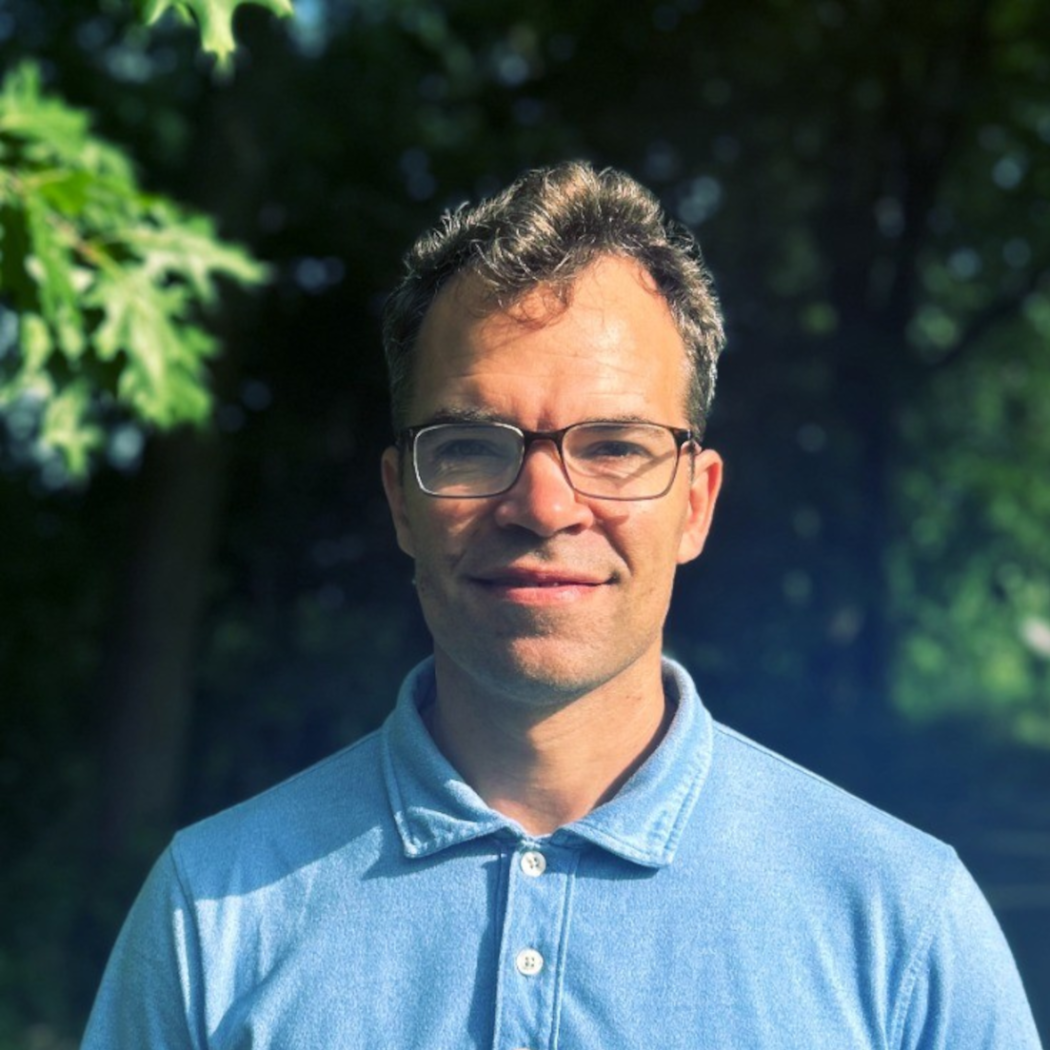
Eric Mittman (JMP)
• Talk: Accelerated lifetime test analysis with competing causes in JMP
• Abstract:
We will demonstrate the analysis of accelerated lifetime test data involving multiple known failure modes using JMP software. Using an iterative approach, we will explore the data visually before trying to determine the best model. Different ways to handle presence of multiple failure mode will be considered, including ignoring failure mode, treating it as a factor in a multivariate regression, and competing causes. We will then show how to extract and interpret valuable model summaries and diagnostics, including median time to failure at an unaccelerated condition.
• Bio:
Eric is an applied statistician and software developer for Reliability platforms at JMP. His work experience includes 7 years at Intel, in Hillsboro, OR, supporting manufacturing and R&D. He holds a PhD in Statistics from Iowa State University.

Adi Dhora (Reliasoft)
• Talk: AI vs. ReliaSoft Engineer - Semiconductor Life Projection.
• Abstract:
Ensuring that compound semiconductors perform reliably across diverse operating conditions and applications requires careful reliability engineering, accelerated life testing, and robust statistical analysis. In the age of AI, has this become easier? The example explored in this session will be that of analyzing reliability test data. Who will do it better? - An engineer with help from ReliaSoft software or a large-language-model with ability to create its own analytical workflow. Find out how software and even AI can be used to make reliability analysis more accessible and easier.
• Bio:
Adi Dhora | Principal Reliability Consultant
Adi Dhora helps business leaders prevent costly operational disruptions by delivering advisory services and software solutions that enable continuous improvement in asset reliability, uptime, and lifecycle cost. Over his 13-year career, he has partnered with more than 60 asset-intensive organizations to transform how asset performance is managed.
Adi specializes in advanced analytics, operationalizing digital twins, and large-scale asset data management to deliver the impact required for Industry 4.0. His recent focus includes AI infrastructure (data centers and semiconductors), autonomous vehicle reliability, and improving the profitability of aftermarket services for equipment manufacturers.
He holds an engineering degree from the University of Waterloo. Outside of work, Adi enjoys rolling up his sleeves renovating his century-old (1904) home in Toronto.
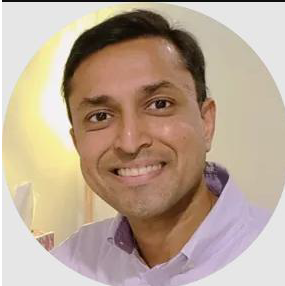
Abeer Singhal (Sentient)
• Talk: Fab Analytics to Agentic AI: Enabling Autonomous Insight-to-Action.
• Abstract:
This talk advocates for a pragmatic, human-in-the-loop path toward autonomous insight-to-action, respecting traditional engineering methods while embracing Agentic AI as a partner for fab optimization with clear actions directed toward reduction in variation and improvement of yield and cycle-timefab optimization.
• Bio:
Abeer Singhal is founder of Sentient and President at Future Foundation North America Inc, Virginia.Sentient is an AI/ML Smart Manufacturing Platform offering tailored solutions to improve process-capability, increase overall equipment efficiency, and reduce line cycle-time of semiconductor-based manufacturing of Sensors, ICs, and MEMS-based devices.Abeer holds a Bachelors in Microelectronic Engineering from Rochester Institute of Technology NY, Bachelors in Electronics from University of Delhi and a Business Diploma from VCU, Virginia. He is co-inventor on U.S. patents and co-author on a SPIE publication all in the field of semiconductor advanced process control. Prior to founding Sentient, Abeer has worked as an equipment technician, process engineer, advanced process control systems engineer, and manufacturing systems architect for Infineon Technologies, Geographic Information Systems (GIS) software engineer to analyze and display geospatial data for Mapcom Systems LLC, and as a visco-elastic polymers rheology and viscometry testing tool designer for Future Foundation.
Austin Fox (Qorvo)
• Talk: AI: Slop or Taking Our Jobs?; One Engineer's Honest Take, Porting Dashboards with Gen AI
• Bio:
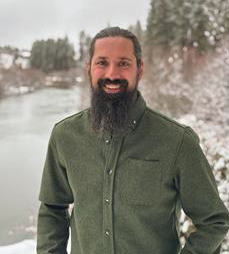
Austin Fox's path to data science started on the fab floor. After earning his PhD in piezoelectric materials at Oregon State University, he joined Qorvo's ultra-low-volume fab in Bend, OR, and found that the data infrastructure needed to answer basic yield questions simply didn't exist. He built it: a Python/Django MES, FDC and SPC systems, and run-to-run control for ion beam trimming, developed in close collaboration with process and equipment engineers across Qorvo. That experience building every layer of the manufacturing data stack, from raw collection through process monitoring to closed-loop control, shaped his move into data science. He now serves as Principal Data Science Engineer at Qorvo, where his current work focuses on making the next layer of that stack, AI-assisted analytics, accessible to engineers who didn't study computer science.
Fred Pool (U of O)
• Talk: Workforce Development Fundamentals for Data Analytics in Manufacturing
• Bio:
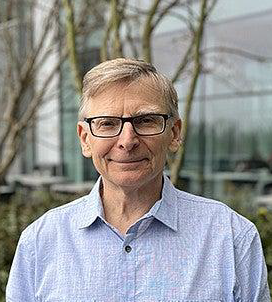
Frederick Pool is a Pro Tem Lecturer and Senior Industry Advisor for the Semiconductors Track of the University of Oregon, Knight Campus Graduate Internship Program. He has 25 years of experience working in the compound semiconductor industry, advancing from a 24/7 sustaining process engineer in plasma etch, to most recently Director of Advanced Technology Integration at Qorvo, from which he retired in early 2023.
Prior to entering the semiconductor industry, Frederick worked for 10 years at the NASA Jet Propulsion Laboratory, California Institute of Technology. He left JPL to join Rockwell Semiconductor in Newbury Park CA (now Skyworks) and later accepted a position at TriQuint (now Qorvo) in Hillsboro OR. Frederick was also a member of the Oregon Workforce Talent and Development Board for many years, a strategic workforce advisory board to the Governor. He received a BS in Physics and a BS in Mathematics from Oregon State University, MS in Physics at Purdue University and PhD in Condensed Matter Physics at Purdue University.
Frederick enjoys being immersed in nature in cross country skiing, hiking and backpacking. In past years he was an enthusiastic rock climber and mountaineer with a summit of Denali his most memorable climb. He holds a Nidan black belt with Shotokan Karate of America. Frederick is a writer of poetry.
Jon Herlocker (Cohu)
• Talk: How Agentic AI Is Changing Factory Analytics: A Practical Brief
• Abstract:
Agentic AI has crossed a capability threshold where it can now automate non-trivial portions of work previously done only by factory engineers — process, yield, test, and maintenance. At Cohu, we're working with semiconductor manufacturing customers to roll out agentic capabilities for data analysis and process control, with the promise of significant gains in automation, yield, and capacity. Along the way we've hit real obstacles — technical, human, and organizational. In this talk I'll cover the major barriers to capturing AI's full benefits in the factory, share practical mitigations from our deployments, and show concrete examples of agentic AI in semiconductor factories today.
• Bio:
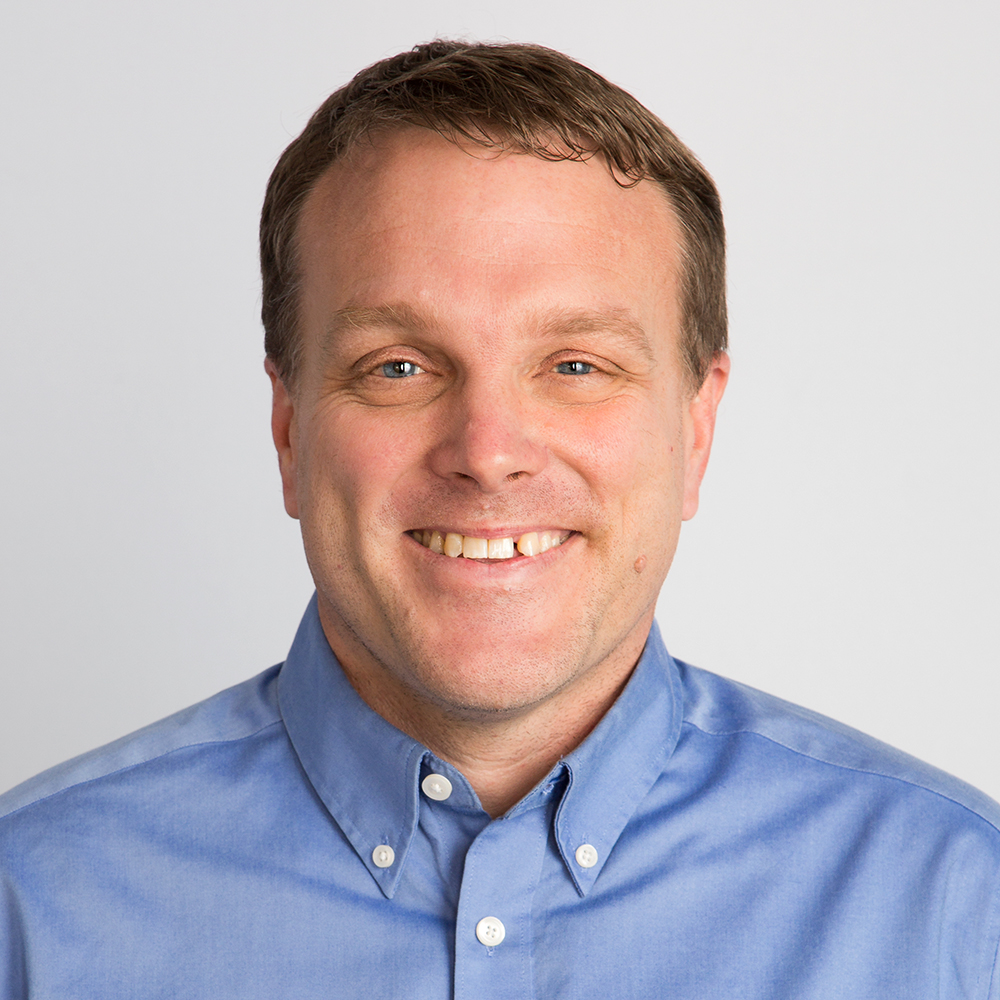
Jon is Vice President and General Manager of Cohu's Software Analytics business, which provides AI/ML solutions for smart manufacturing and process control in the semiconductor manufacturing space. Jon is a deep technologist and experienced executive who has a long history of leading innovation in big data analytics and applied artificial intelligence and machine learning. Jon joined Cohu through its acquisition of Tignis, Inc., the company he co-founded and led as CEO. His career began in the nineties where, as the lead engineer of MovieLens, he helped create the field of recommender systems as popularized by companies like Netflix and Amazon. In his prior leadership roles, he was Vice President and Chief Technology Officer (CTO) of VMware's Cloud Management Business Unit, CTO of Mozy, and CTO of EMC's Cloud Services division. Jon is an experienced entrepreneur, having founded three startup companies. Jon is a former tenured professor of Computer Science at Oregon State University, and his highly cited academic research work was awarded the prestigious 2010 ACM Software System Award for contributions to the field of computer science. Jon holds a Ph.D. in Computer Science from the University of Minnesota, and a B.S. in Mathematics and Computer Science from Lewis and Clark College.

Chandhana Padmanabhan (Databricks)
• Talk: Predictive Quality for Compound Semiconductors: Scaling Engineering Intuition with Data + AI
• Abstract:
Compound semiconductor engineers develop deep intuition about yield, process drift, and equipment health over years of experience. But that expertise often lives in people, not systems — making it difficult to scale, transfer, or act on in real time.
• Bio:
Chandhana is a Senior Specialist Solutions Architect at Databricks, focused on helping enterprises in semiconductors, automotive, cybersecurity, and supply chain build and scale AI and ML systems — turning AI ideas into production-grade data products. With a Bachelor's in Electrical and Electronic Engineering, a Master's in Management Information Systems, and a background spanning Software Engineering, Marketing Analytics, and Data Science at Ford Motor Company (connected vehicles and mobility), she brings both technical depth and real-world industry experience.
Kari Ross (Databricks)
• Talk: Predictive Quality for Compound Semiconductors: Scaling Engineering Intuition with Data + AI
• Abstract:
Compound semiconductor engineers develop deep intuition about yield, process drift, and equipment health over years of experience. But that expertise often lives in people, not systems — making it difficult to scale, transfer, or act on in real time.
• Bio:
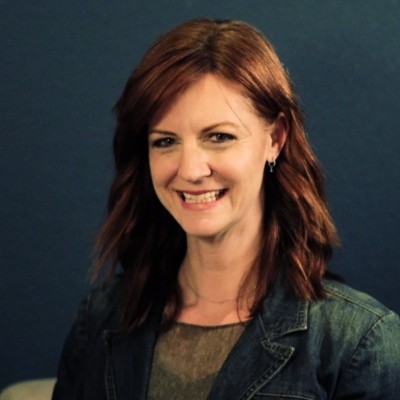
Kari Ross is a Senior Solutions Architect at Databricks with 10+ years building production-grade architectures, agentic systems, and end-to-end ML pipelines. She holds a Bachelor's in Electrical Engineering and a Master's in Data Science. She started in signal processing — designing probabilistic algorithms to fix errors before they became failures, in silicon and firmware alike. She followed the math, and it led her to AI. She has spent the last five years helping Fortune 500 manufacturers move from AI strategy to working systems.